

Our built heritage always seems to be about the castles and the and churches. Sometimes it is the modest structures that are the most evocative and stirring.
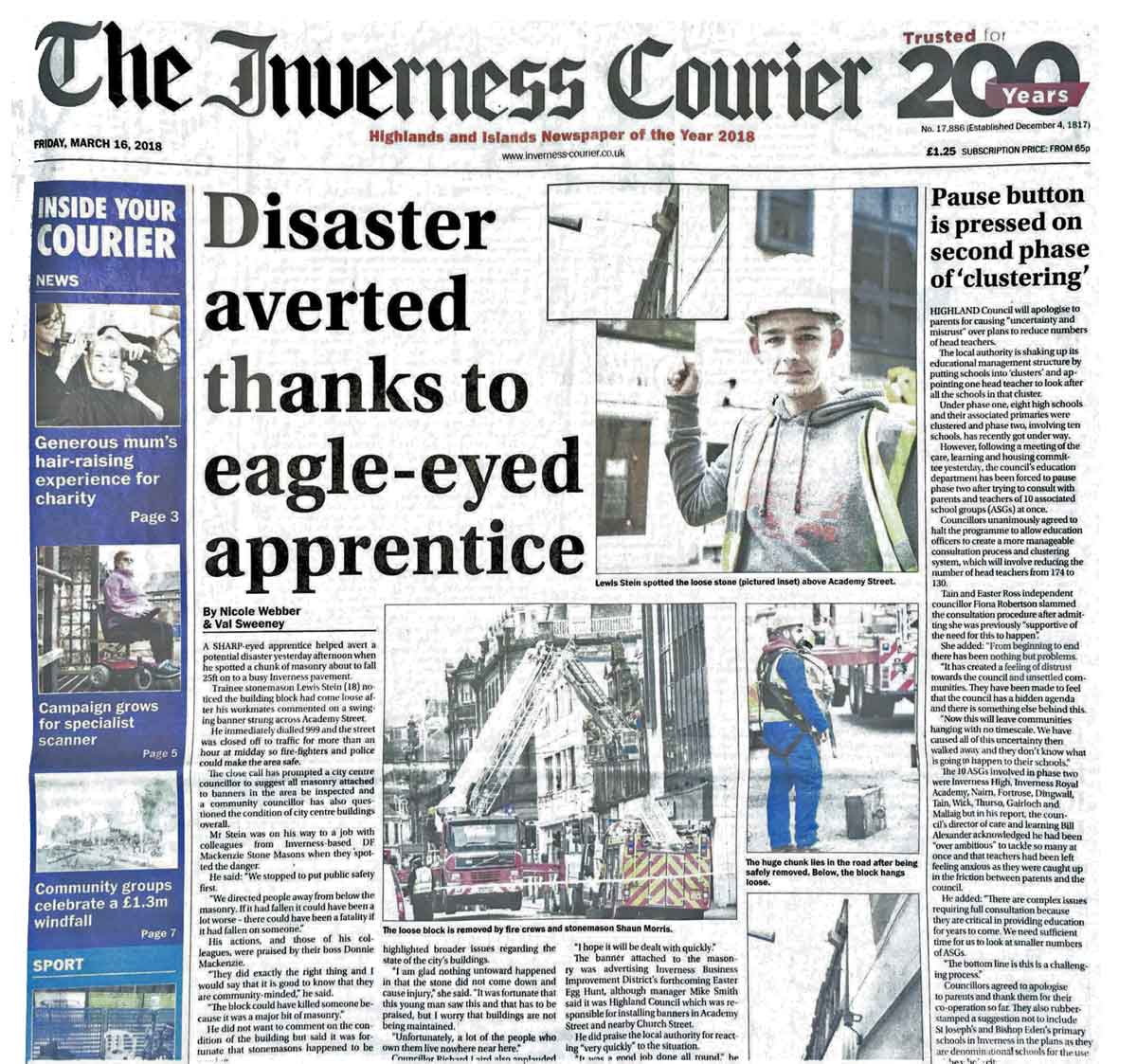
Damage caused by high winds to historic buildings in the centre of Inverness made the headlines this week.
Masonry falling from buildings is always extremely dangerous and has caused fatalities in the past, it is no surprise that it is a matter of public concern. However, there was an irony about the response of some of our councillors, reported in the local press.

This is not an early St Patrick's day image. This is an image from a Building Health Check we recently carried out near Inverness.
Streaky buildings not only look unsightly, they can indicate that your building is not preforming properly. This is not always the case though, as algae can also being used to heat your hot water.

Whether you are looking for tradition or innovation, boldness or understatement, an architect can lift your project out of the ordinary. Many people will offer to alter your building. It takes an architect to maximise its potential and to do it with flair, imagination and style.

This valentines day, don’t forget your other significant other.
So… how would you describe your relationship with your home ?

Traditional thatched cottages are few and far between these days. However, up to the Victorian era, thatching was the common form of roof covering, even in town. Many of the houses around Inverness were thatched.
When I was invited to inspect an authentic thatched cottage, on Skye, owned by the National Trust for Scotland, it was an opportunity to reflect on highland vernacular buildings and culture.

MAAC Studio Ltd, 67A Castle Street, Inverness, IV2 3DU
- Phone: 01463 568100
- Email:


RIAS Accredited
Conservation Architects